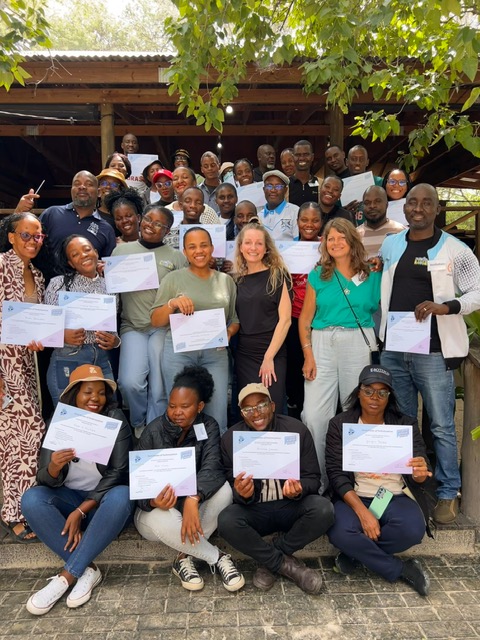
From 5–7 March 2026, Re Jala Peo, in collaboration with Sjouke Ummels of Superhero Academy, brought together 39 dedicated teachers and facilitators from Maun for an inspiring and transformative three-day training. The shared goal: to create safe, supportive learning environments across Maun’s education system.
The training began with a powerful realization; teachers are not only educators, but role models, sources of knowledge, and key drivers of change. Their wellbeing is essential. When teachers take care of themselves, they are better equipped to show up each day as the best version of themselves, the “superheroes” their students need. Participants explored practical tools for stress management, self-care, and self-preservation, and each developed a personal plan to apply these strategies in their daily lives.
Building on this foundation, the group examined the deeper purpose of education and the critical role of social safety in learning. It became clear that students can only truly develop and thrive in environments where they feel safe. Discussions highlighted how negative experiences—both past and present, including trauma—can undermine this sense of safety and make behavior more difficult to manage.
A key focus of the training was the impact of corporal punishment. Through open dialogue and shared insights, participants explored its negative consequences. It became evident that this form of discipline does not align with the values of education and can be harmful to children’s behavior, learning ability, and overall development in the short, medium, and long term.
Participants were introduced to global best practices in education, learning how preventive, supportive, and effective teaching approaches can foster positive behavior and strong academic outcomes. Central to this is creating a learning environment with clear expectations, consistency, guidance, and fair, constructive consequences.
During interactive working sessions, teachers translated these insights into their own cultural context. They reflected on what is already working, how to build on existing strengths, and what additional steps are needed to create safe learning environments. A crucial outcome was the recognition that abolishing corporal punishment, and shifting deeply rooted norms, requires action on six interconnected levels:
- Student level
- Teacher level
- School management level
- Parental level
- Community level
- Governmental level
A needs assessment further emphasized that meaningful change depends on engagement, ownership, and commitment across all these levels. While the journey will take time and effort, participants agreed that change is both necessary and achievable.
The program concluded with a dedicated training day for school leaders and a representative from the Department of Education. Together, they reviewed the key insights and outcomes, reflecting on their roles and responsibilities in driving change at the school management level. Through collaborative discussions, they identified practical steps and support needed to move forward.
Overall, the training was marked by deep insight, strong connection, and a shared sense of hope. Participants not only recognized the urgency of change, but also gained clarity and inspiration on how to implement it. This marks a promising beginning of a long-term transformation process, one rooted in collaboration, local ownership, and a collective commitment to creating safe and nurturing learning environments for every child in Maun.
Re Jala Peo and Superhero Academy remain committed to supporting the next steps in this journey, ensuring that all stakeholders stay connected and empowered as this important work continues. Thank you dear Sjouke for all your effort!
